
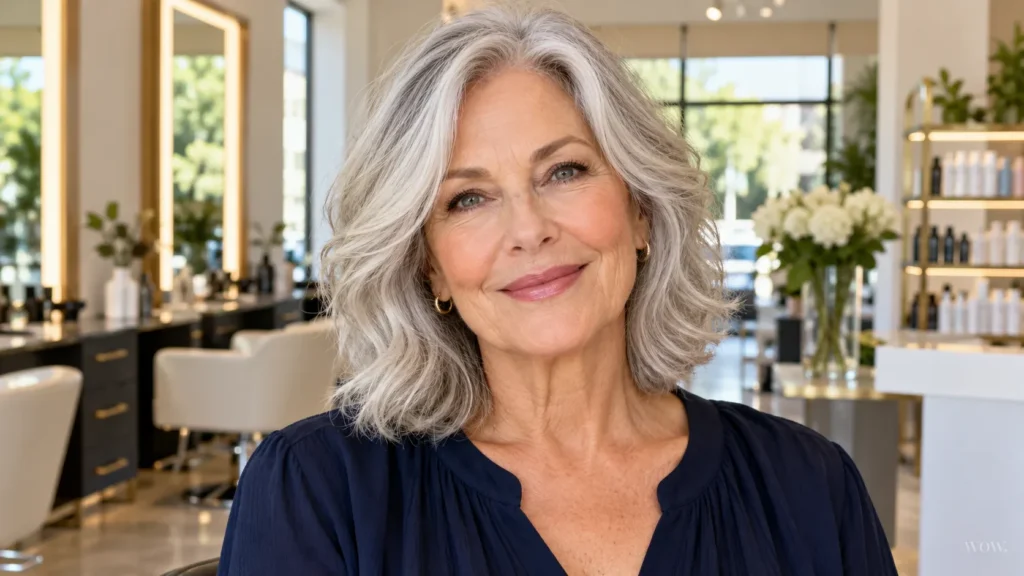
Mid length hairstyles for women over 60 are useful because they leave room to wear the hair down, clip it back, or change the part without committing to a long cut. “Mid length” is not one exact measurement: a shoulder-grazing cut, a collarbone lob, and a layered cut that brushes the upper chest can behave differently in everyday life.
This guide offers 30 pictured ideas across straight, wavy, curly, and coily textures. Each style includes a specific point to discuss with your hairstylist. These are illustrative images, and your results will depend on your own hair density, growth pattern, texture, and styling routine. Your sixties do not require a certain color or haircut.
How to choose a mid length cut that works for you
Start with your hair when it is dry and worn the way you usually wear it. If your ends are fine, a fuller perimeter might matter more than layers throughout. If your hair is wavy or curly, ask where the cut will land after the curl springs back. If you need to tie it up, the length of the front pieces and the nape matters as much as the longest section in back.
Look at photos from more than one angle. A cut can appear shoulder length from the front but sit above the shoulders at the back. Tell your stylist whether the picture shows the shape you want naturally or only after a salon blowout. That one conversation can prevent disappointment when you style it at home.
Quick comparison by hair type and routine
| If you want… | Consider… | Ask about… |
|---|---|---|
| Defined ends on fine hair | Blunt or full-ended lob | How many layers will remain at the bottom |
| Movement in straight hair | Long face-framing layers | How it falls without a blowout |
| Natural wavy texture | Soft shag or long layers | Where the shortest layer starts |
| Curly or coily fullness | Graduated, balanced layers | Dry length and volume distribution |
| Easy partial updos | Collarbone lob | Whether the front and nape can be clipped back |
30 mid length hairstyles for women over 60
1. Silver shoulder-length curls
Lightly graduated layers can give curls room to form without removing too much weight from the ends. Tell your stylist where you want the finished shape to sit after your curls dry, since the wet length may look quite different.
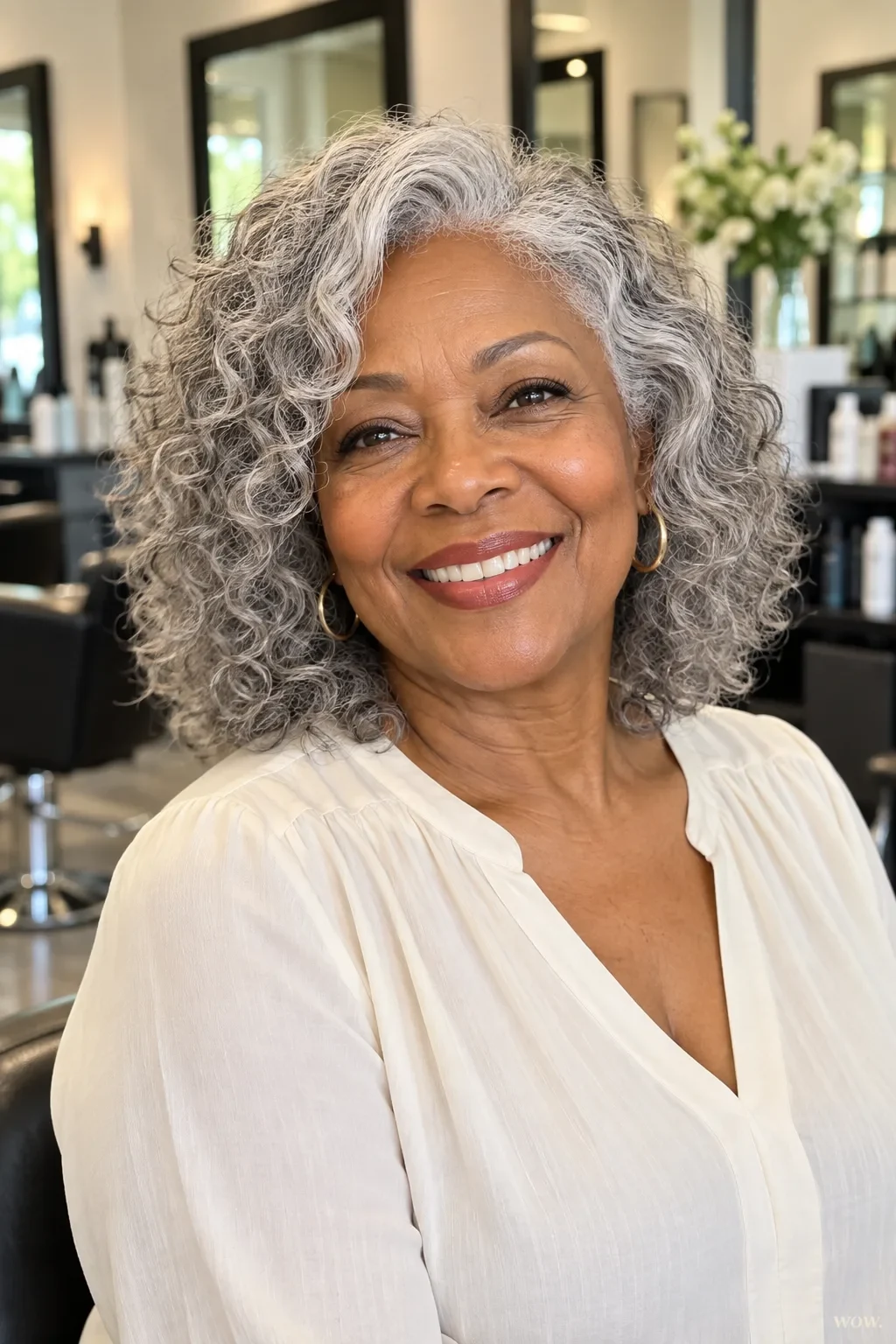
2. Blunt silver collarbone lob
A nearly straight perimeter keeps the ends looking defined. This can be a useful starting point if your hair is fine and you want to avoid wispy tips. Ask to see exactly where the cut will land when dry, especially if the hair tends to turn out at the shoulders.

3. Sleek gray medium bob
A side part changes the silhouette of a straightforward shoulder-length bob without requiring heavy layers. Show your stylist your natural part: forcing the hair the opposite way can make an otherwise easy cut harder to style at home.

4. Brown layers with side-swept bangs
Keeping your color is an option at every age. Longer side bangs can blend into face-framing layers, giving you movement without committing to a short fringe. Confirm that the shortest piece can still tuck behind your ear if that matters to you.
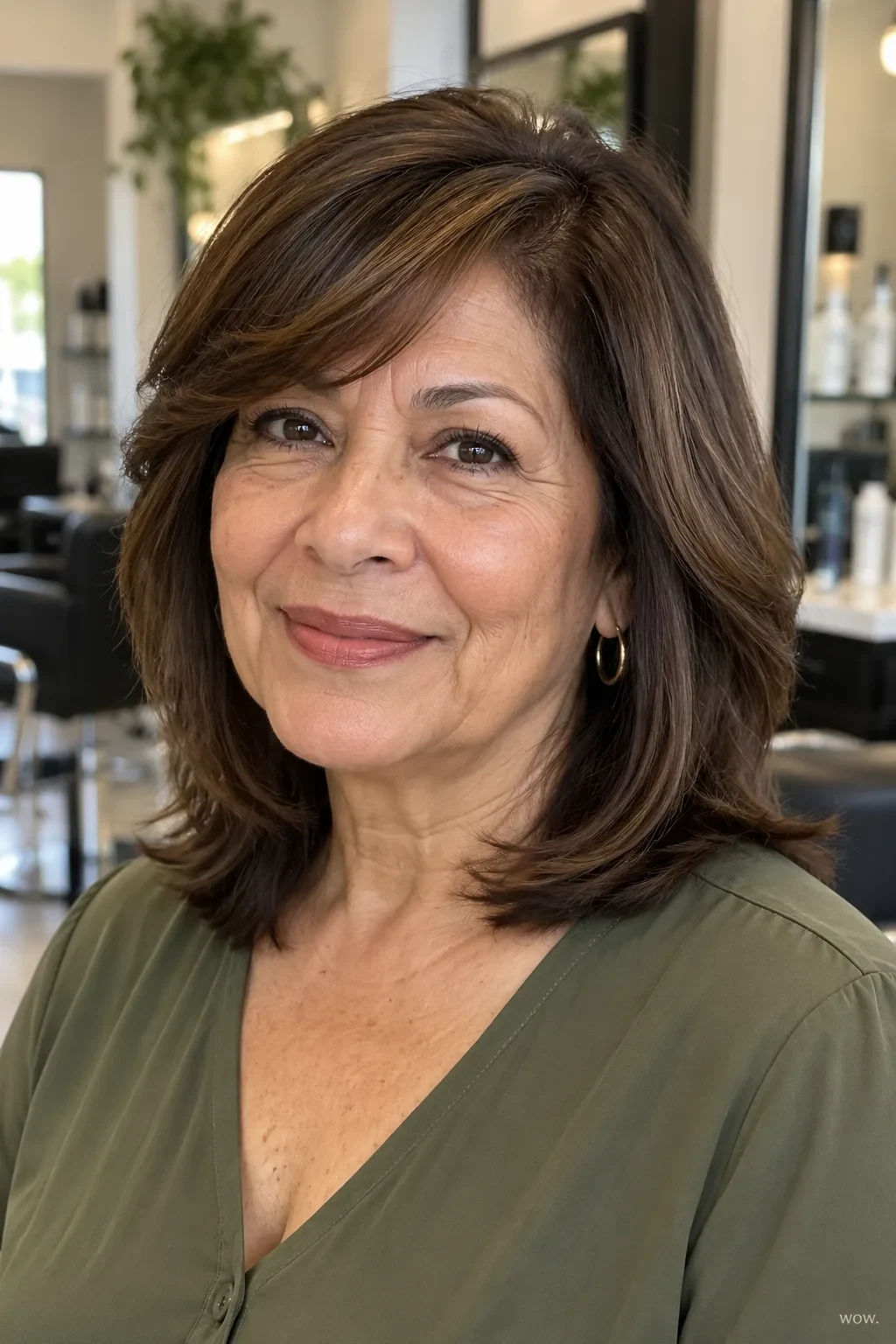
5. Wavy gray lob with curtain bangs
An open, longer fringe pairs naturally with loose waves. Have the stylist check how the pieces separate around your forehead when the hair is dry. A long starting point leaves room for a shorter adjustment later.
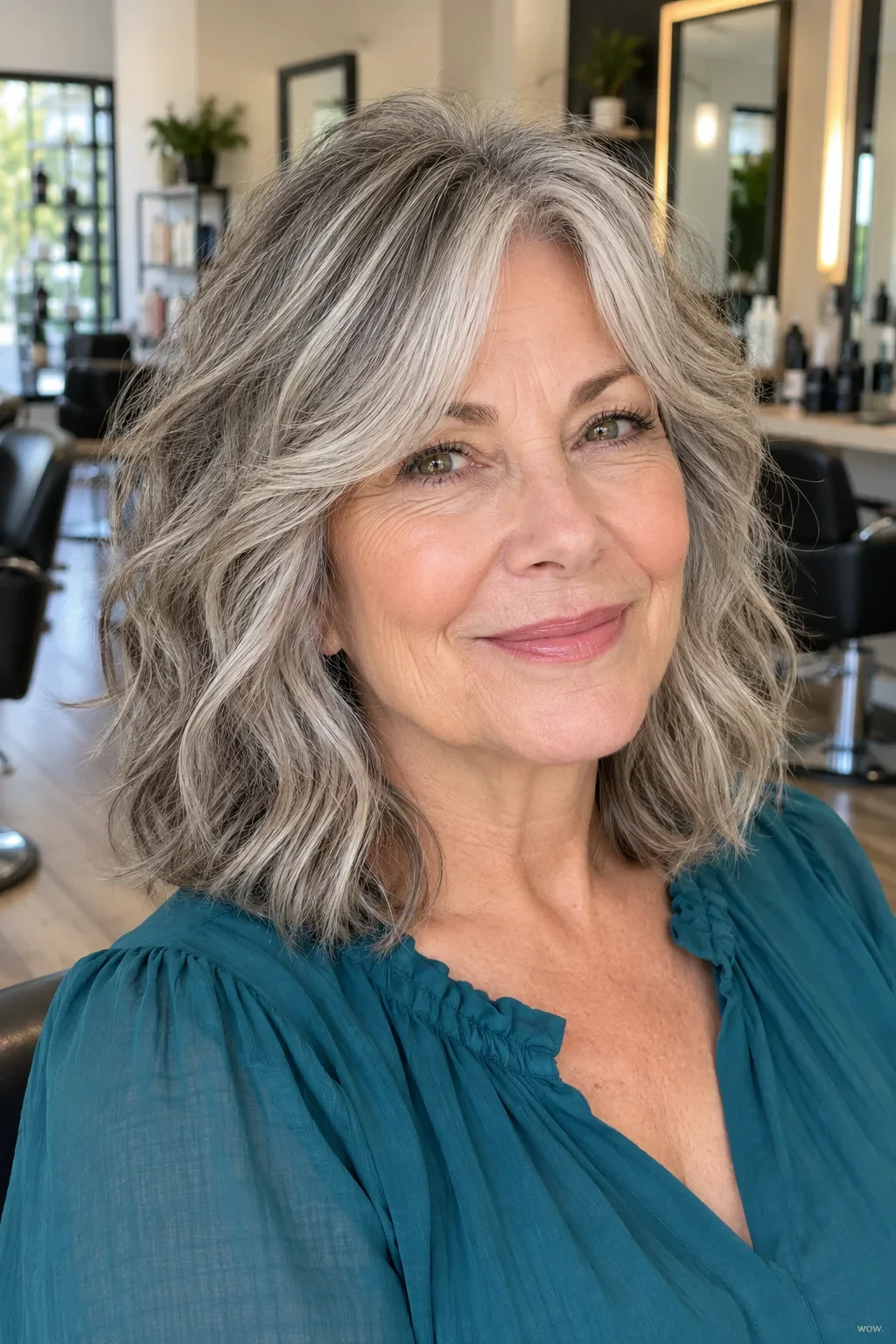
6. Salt-and-pepper shoulder-length coils
Rounded layers can help distribute the shape of coily hair while preserving visible fullness. If you love volume at the sides, say so. A good consultation follows your preference for the final outline rather than assuming volume should be removed.
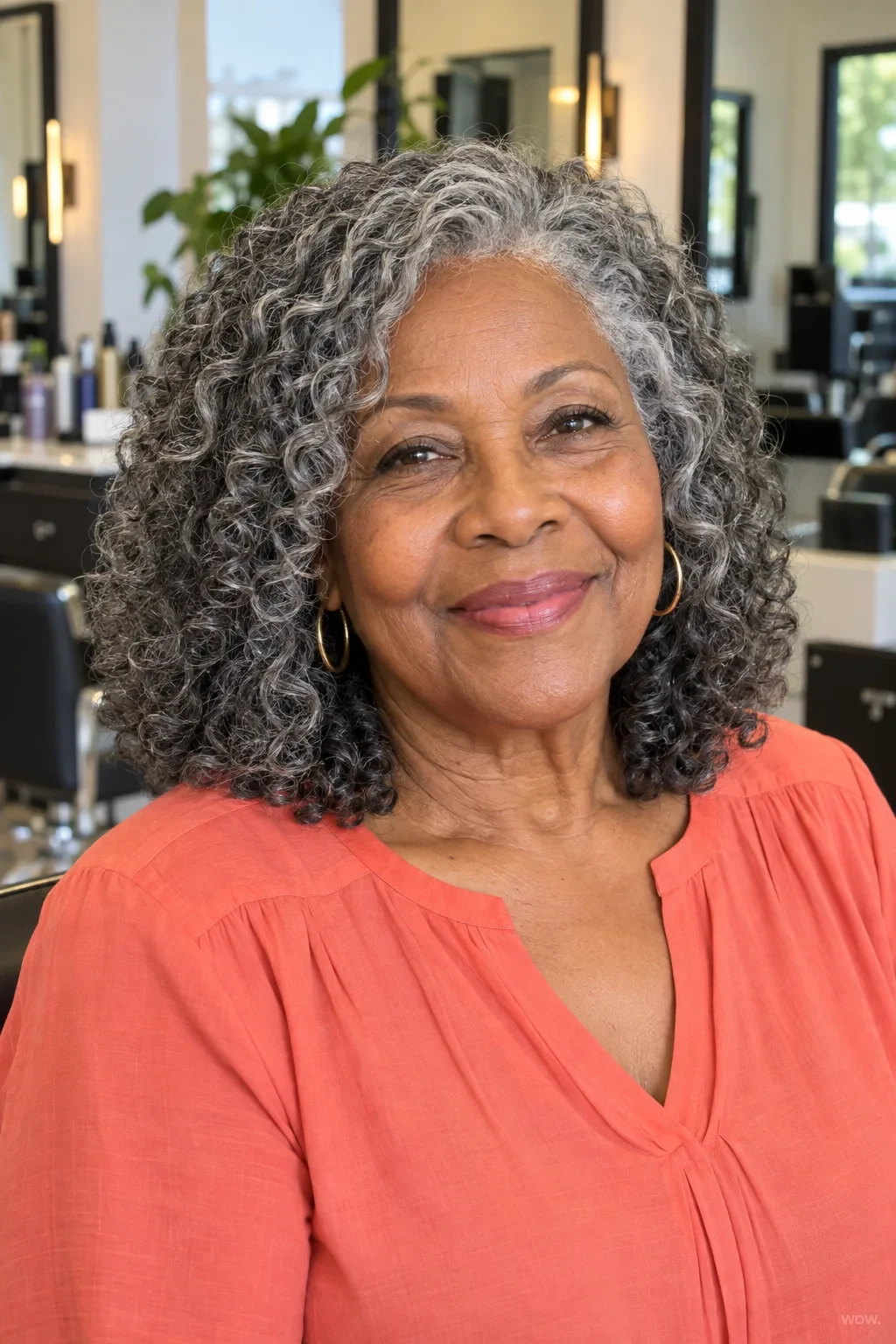
7. Auburn shoulder-length waves
A softly waved cut can end right at the shoulders while still offering enough length to pull part of it back. Ask whether the base should be almost straight or slightly rounded. The choice affects how the wave sits from the back.
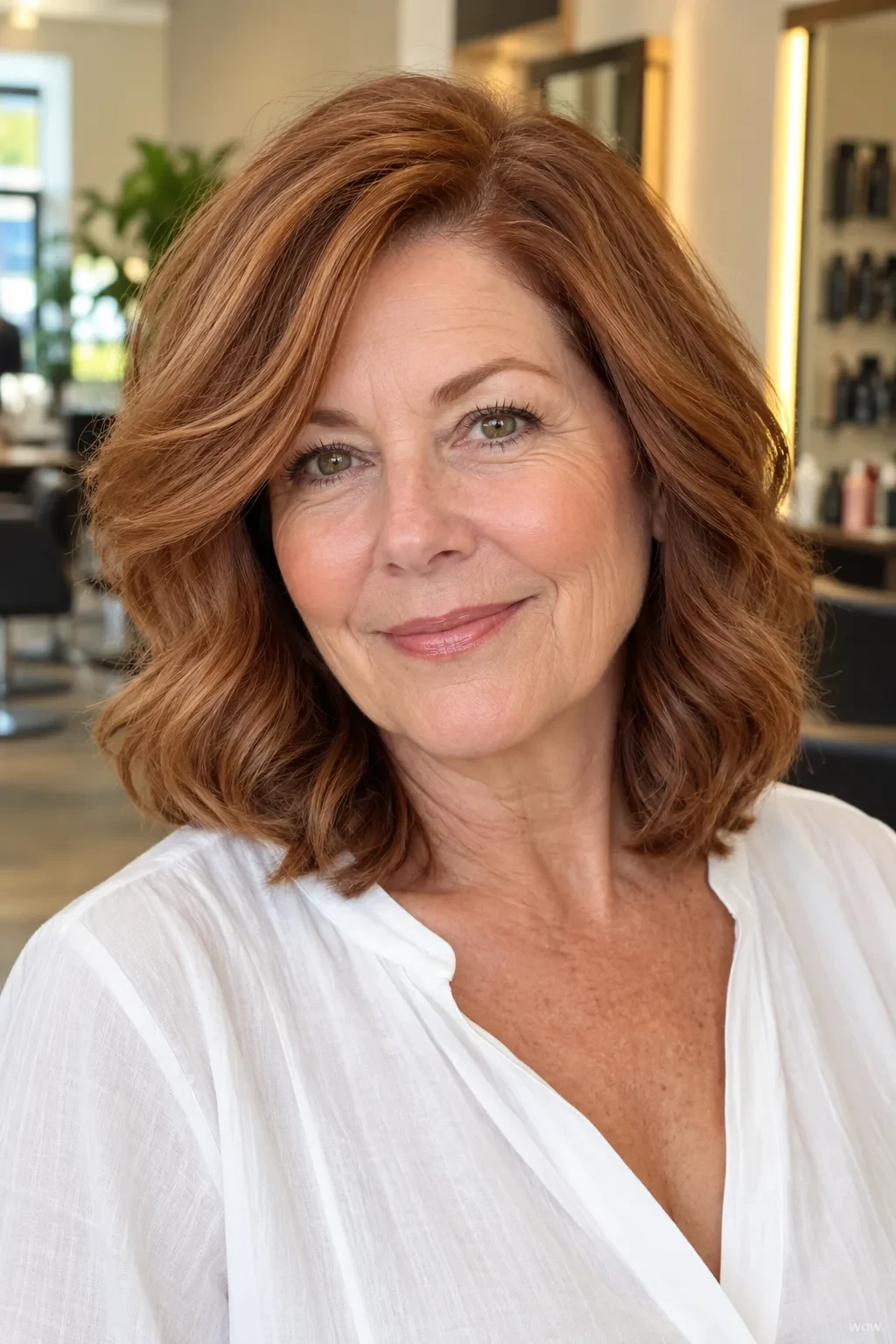
8. Silver medium shag
A medium shag uses noticeable layers to create an airy outline. On finer hair, ask how much fullness will remain along the bottom before adding more texture. A long fringe can be worn to either side as it grows.
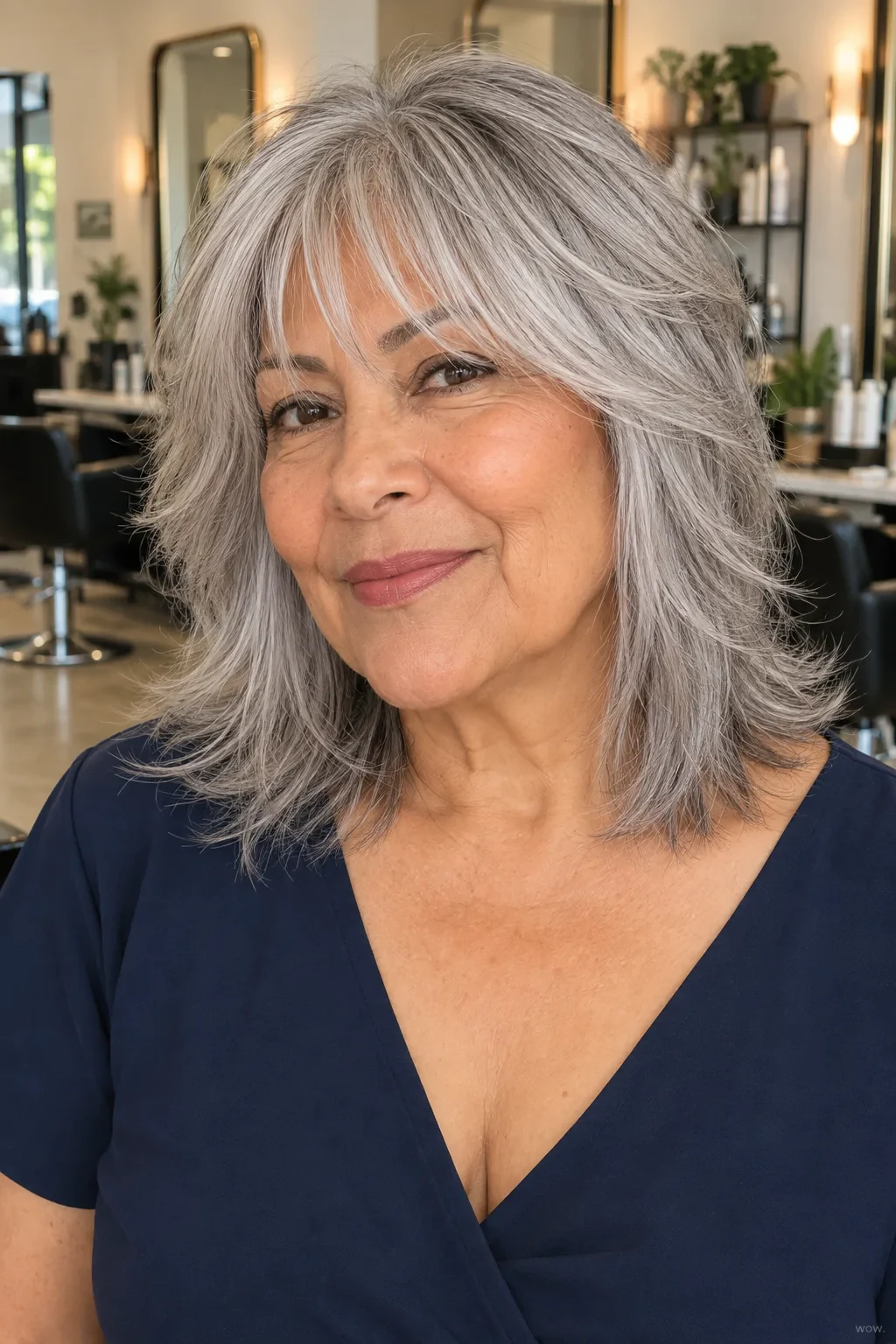
9. Dark hair with gray streaks and C-shaped layers
Subtle layers near the front can bend inward around the face while the rest stays close to one length. A picture from the side will help show how high the first layer begins and whether you will need a blow-dry for that particular curve.
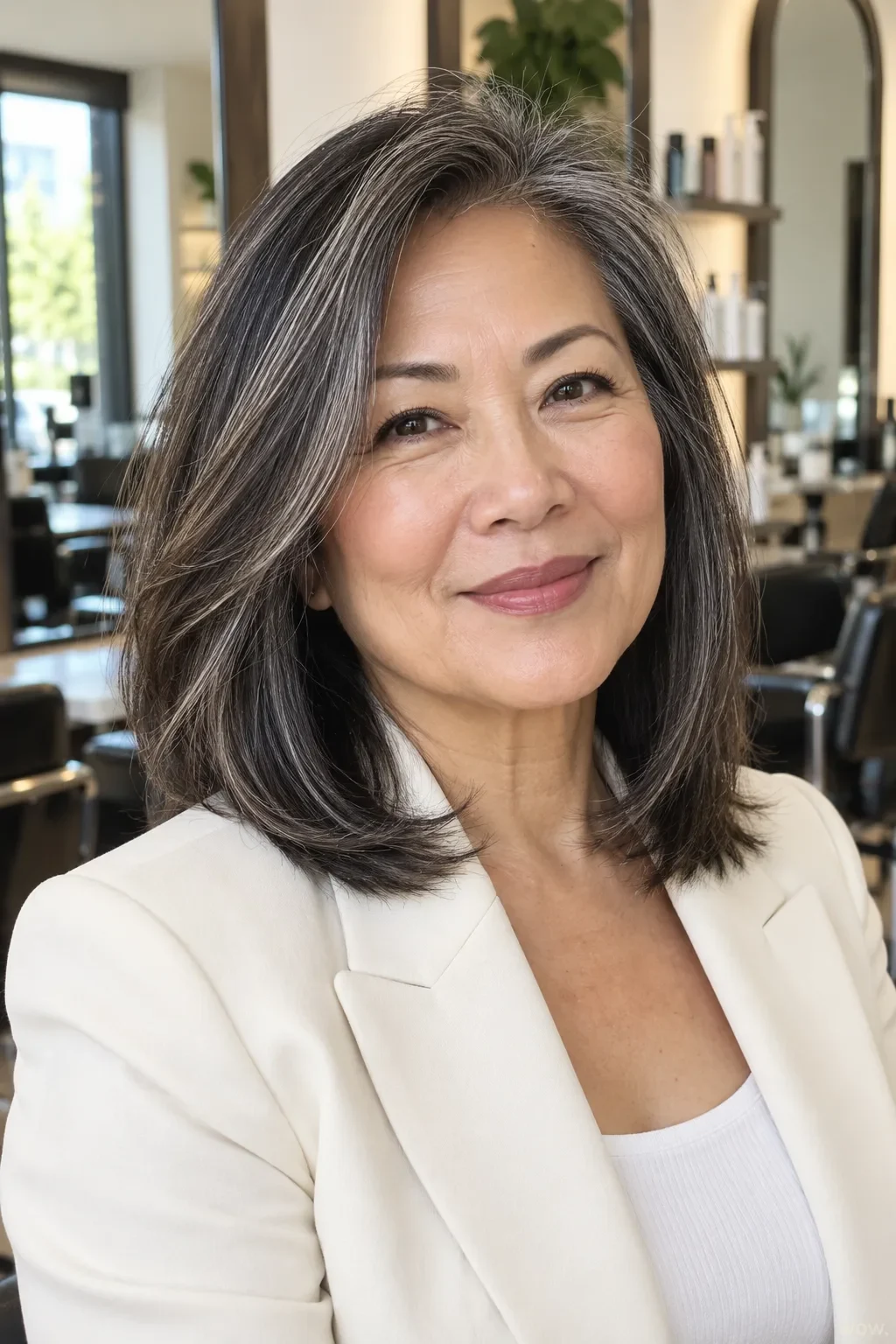
10. White curls with long layers
Longer layers can preserve a shoulder-length shape in naturally curly white hair. Discuss shrinkage before the first cut and check the result in your usual dry styling state. The goal is a shape you can recognize outside the salon.
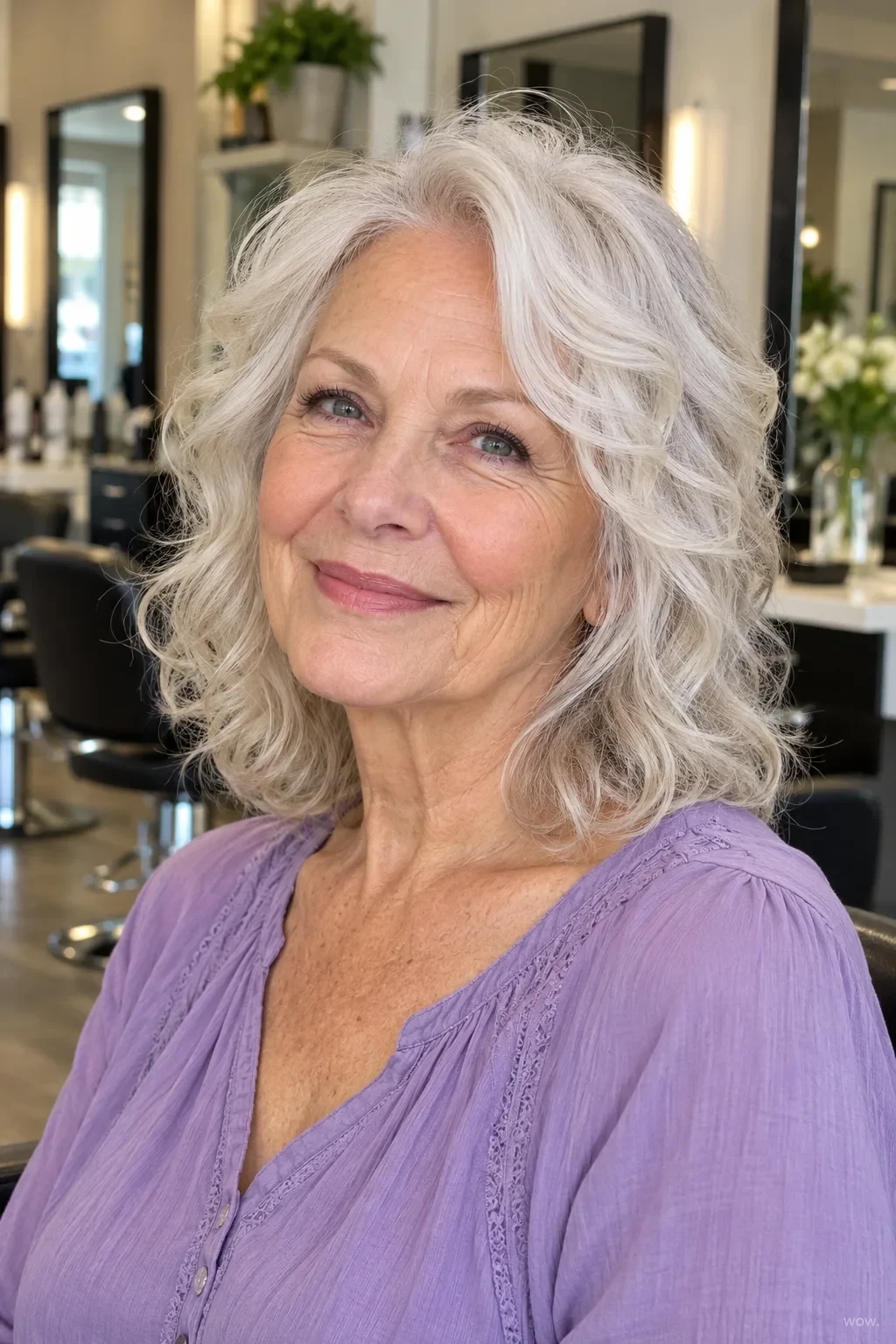
11. Chestnut natural curls at the shoulders
A medium curly cut leaves room to show curl definition and still try partial updos. Ask the stylist to shape the front according to how the curls spring up. Cutting the face-framing strands too short while wet can change the look dramatically.
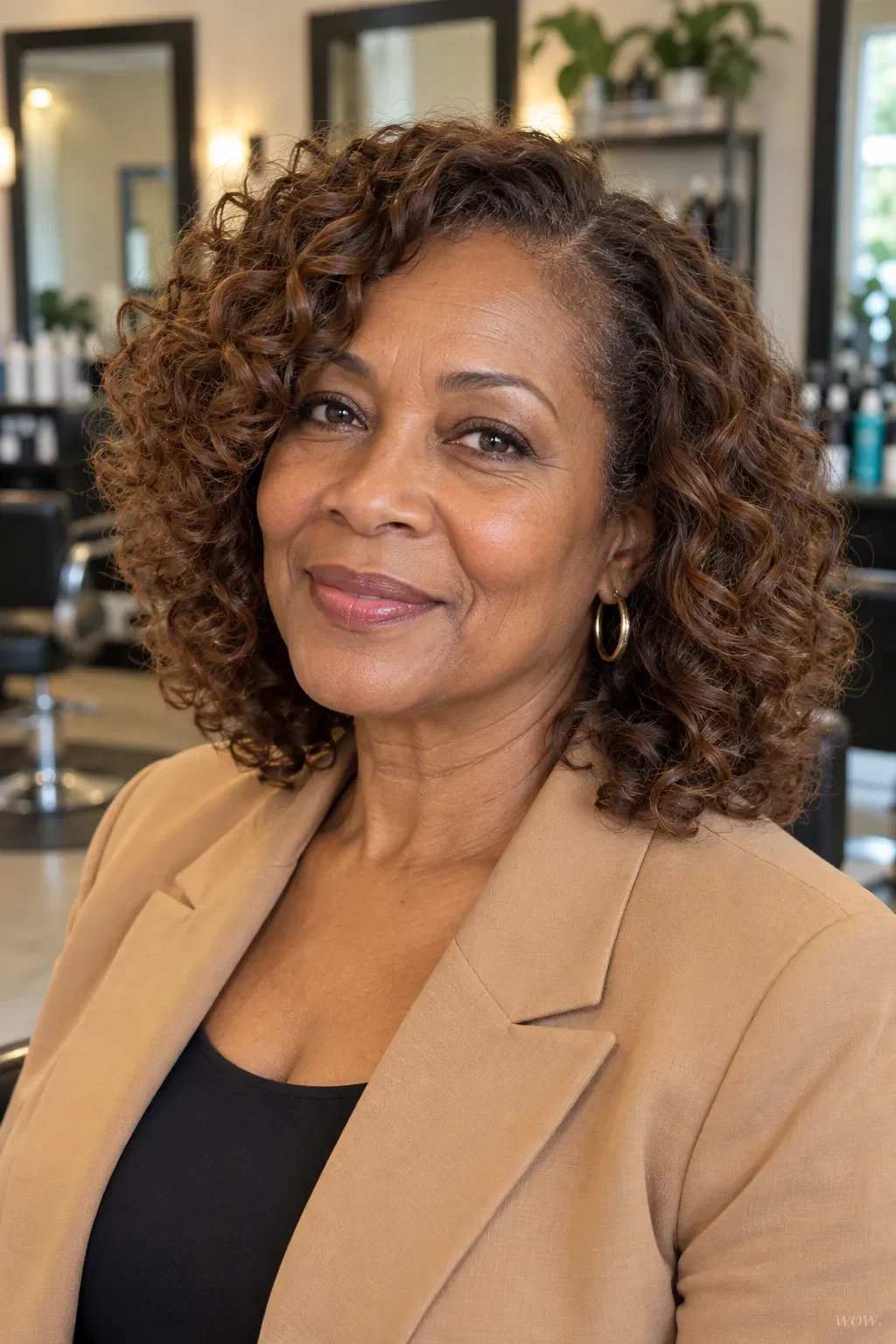
12. Silver lob with a wispy curtain fringe
A light fringe changes a simple lob without sacrificing the length of the main cut. If hair falls flat at the roots, discuss the part and the drying routine before requesting short layers everywhere.
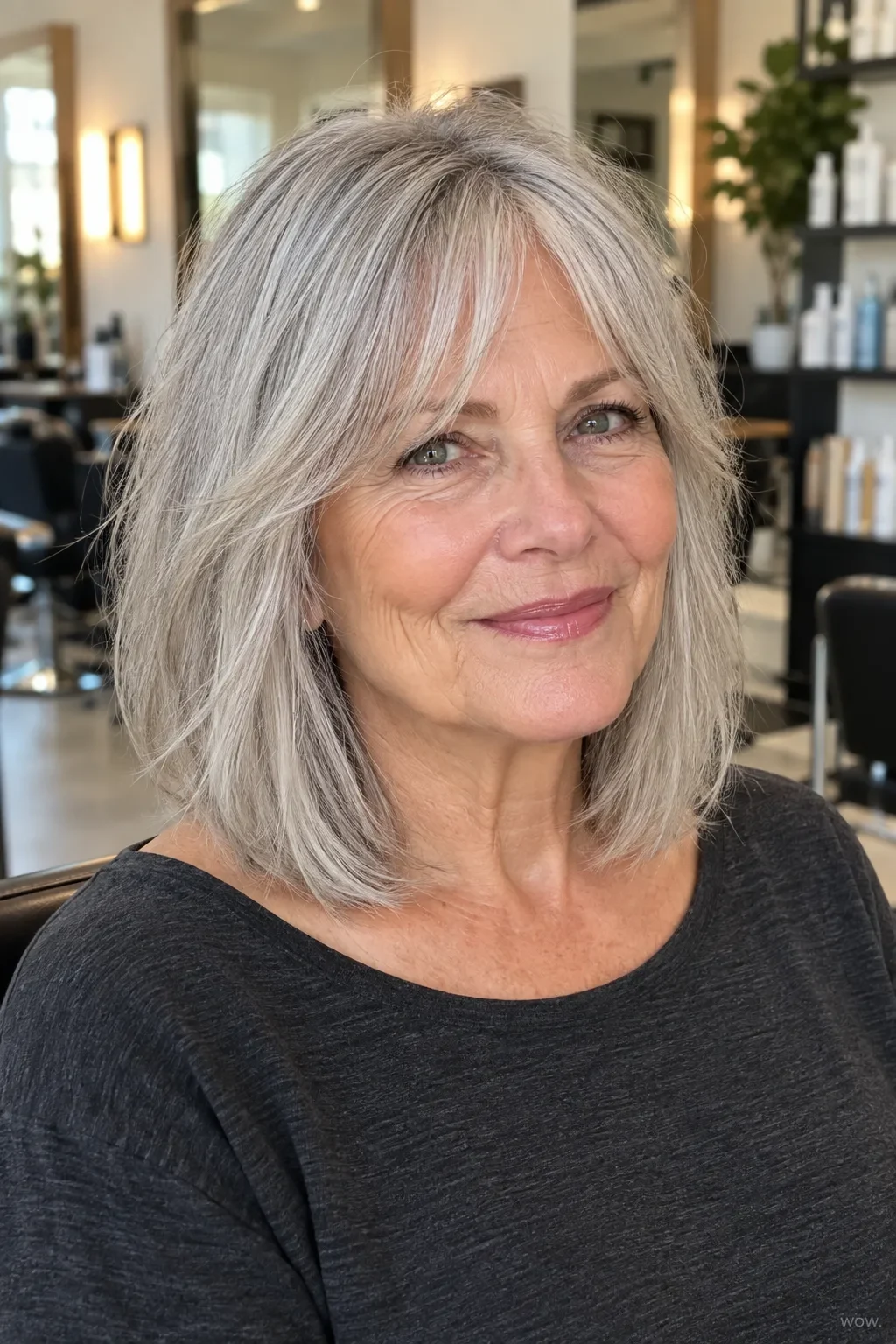
13. Salt-and-pepper waves with an off-center part
An off-center part lets one side frame the face a little more than the other. Soft, longer layers can keep the waves moving. Ask the stylist to check the shape after your natural wave pattern has settled.
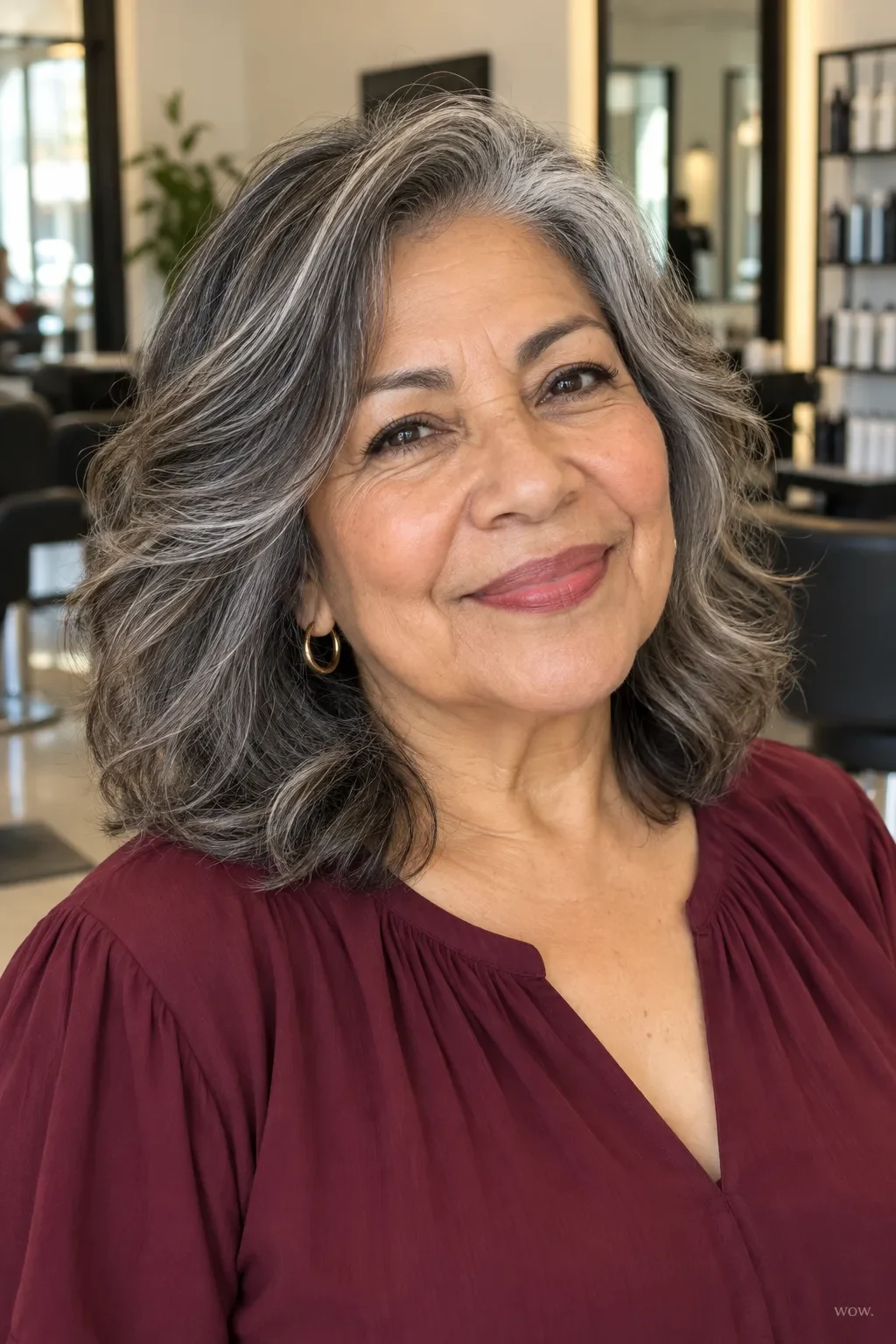
14. Blonde blunt shoulder cut
A fuller baseline can make fine straight hair look more defined at the tips. You can keep the color you enjoy and let the haircut do the work of shaping it. If you need to put the hair up, test the shortest front pieces first.

15. Gray curls with a soft fringe
A curly fringe can bring the texture forward without making the whole cut short. Its dry length is the detail to settle before the scissors come out. You can choose a full, airy, or side-swept version depending on how you wear your curls.

16. Silver butterfly-inspired medium layers
Long face-framing pieces give this medium cut some of the movement associated with a butterfly cut. Keep the first layer low if you want to maintain fullness around the ends. Bring a picture showing the back as well as the front.
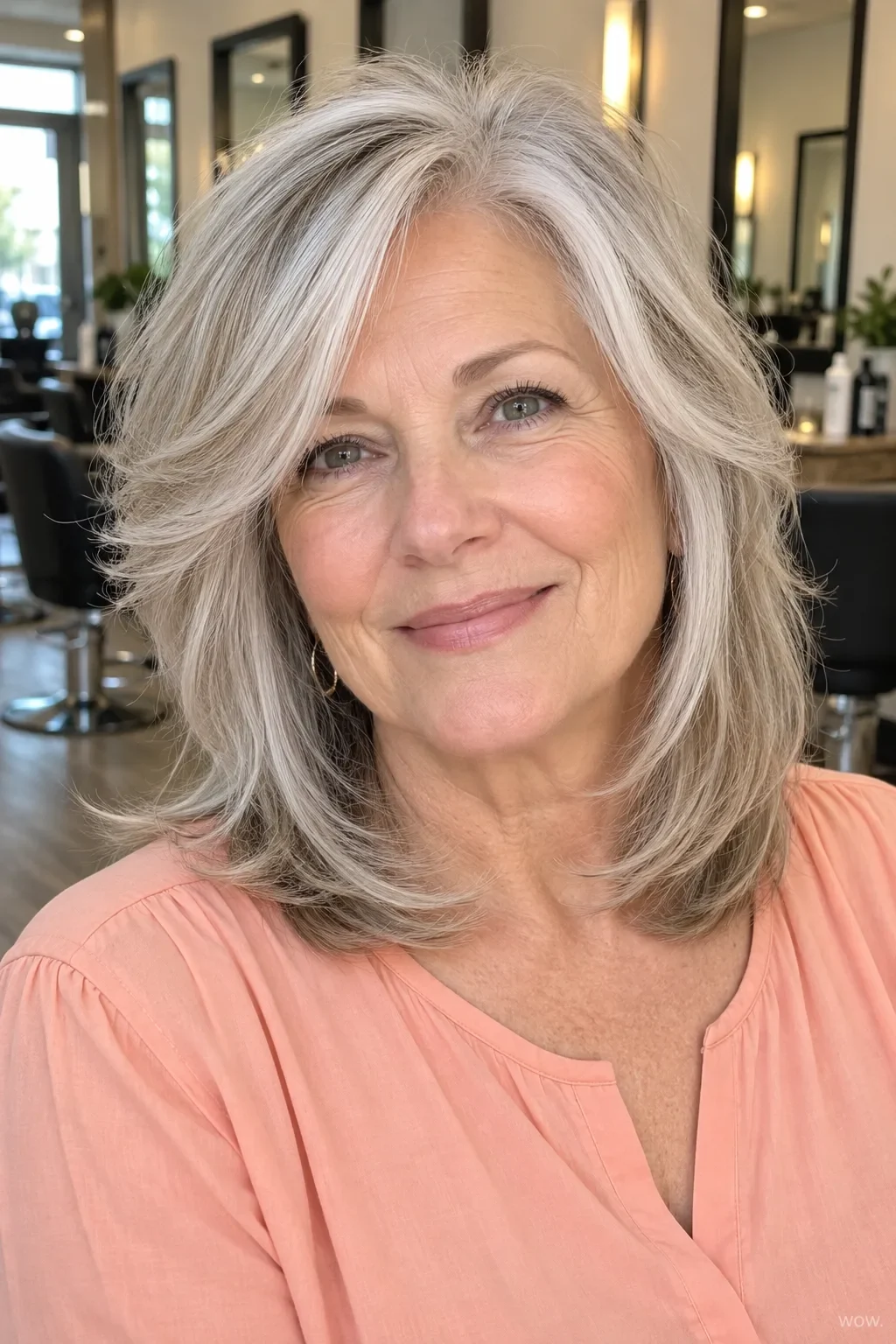
17. Dark gray full-ended lob
A collarbone lob with a solid outline can work beautifully on straight hair with salt-and-pepper color. Before thinning thick hair, ask the stylist to explain how much weight will be removed and whether the bottom line will remain visible.
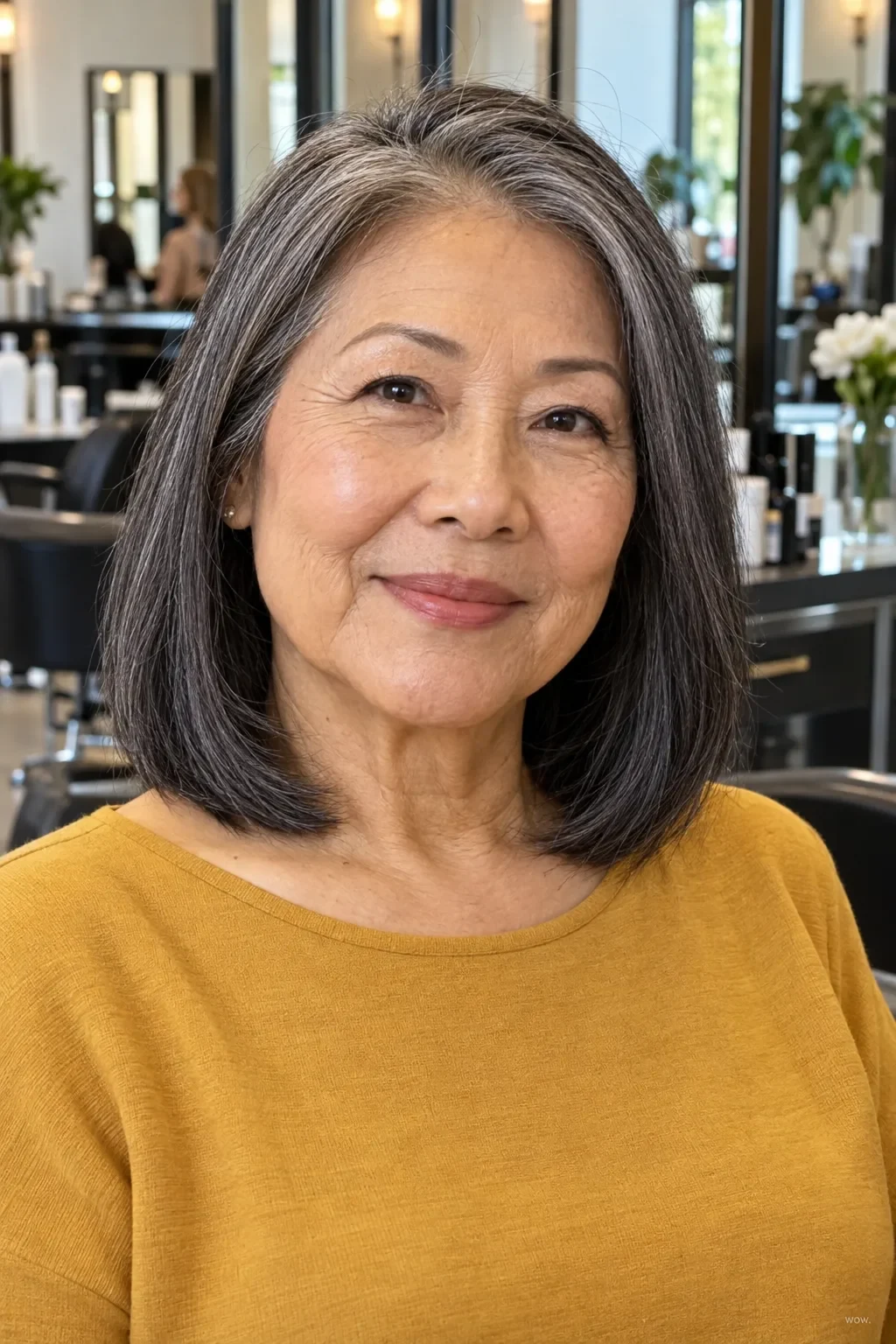
18. Brown-gray wavy medium shag
Waves make the layers in a shag easier to see even without a polished blowout. Ask for a softer version if you prefer less dramatic texture. A curtain fringe can stay long enough to blend into the front layers.
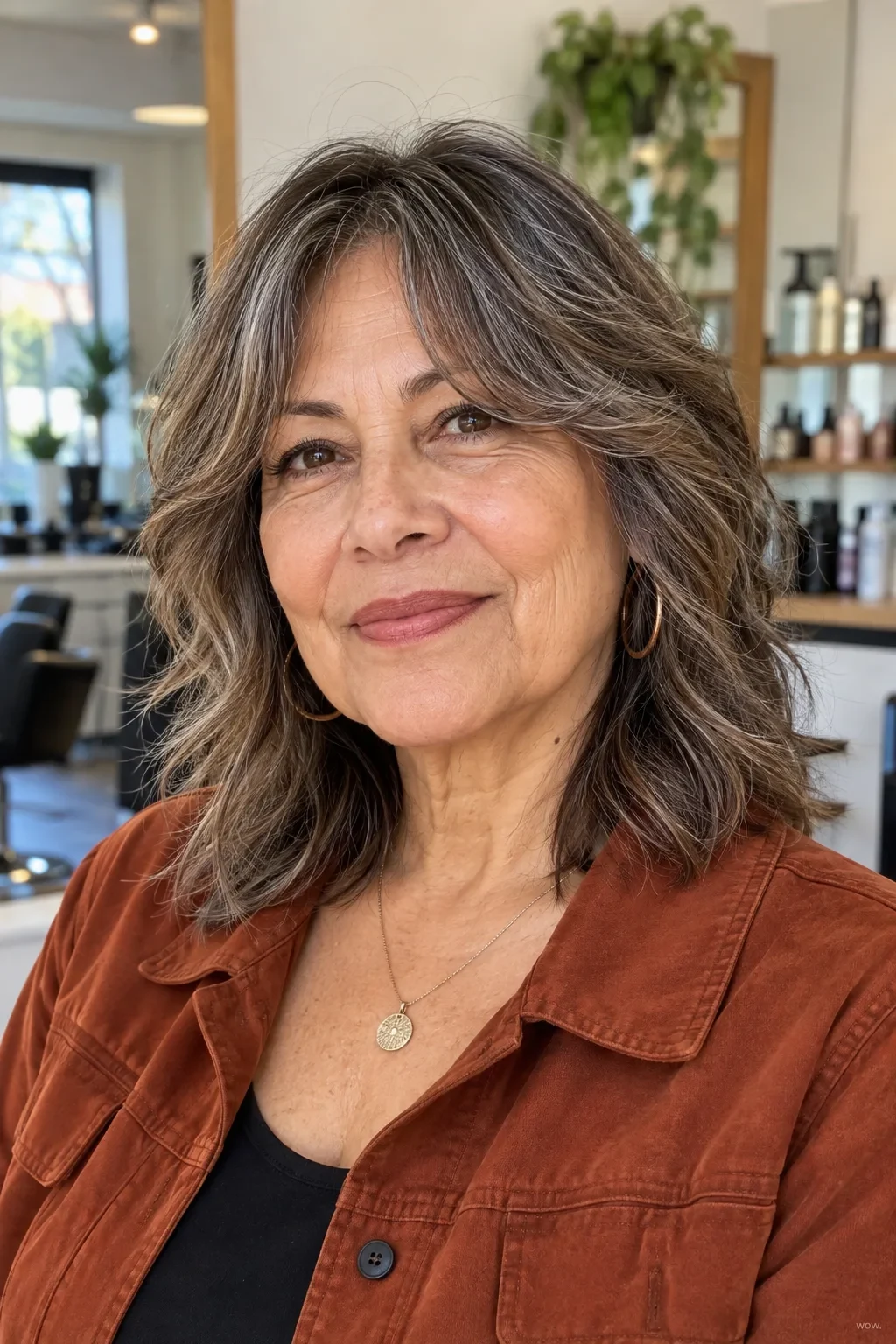
19. Silver coils with a rounded shoulder shape
A full rounded silhouette lets natural coils take center stage. Choose how much lift you want at the crown and how much width you prefer near the cheeks. These are styling choices, not restrictions based on age or face shape.
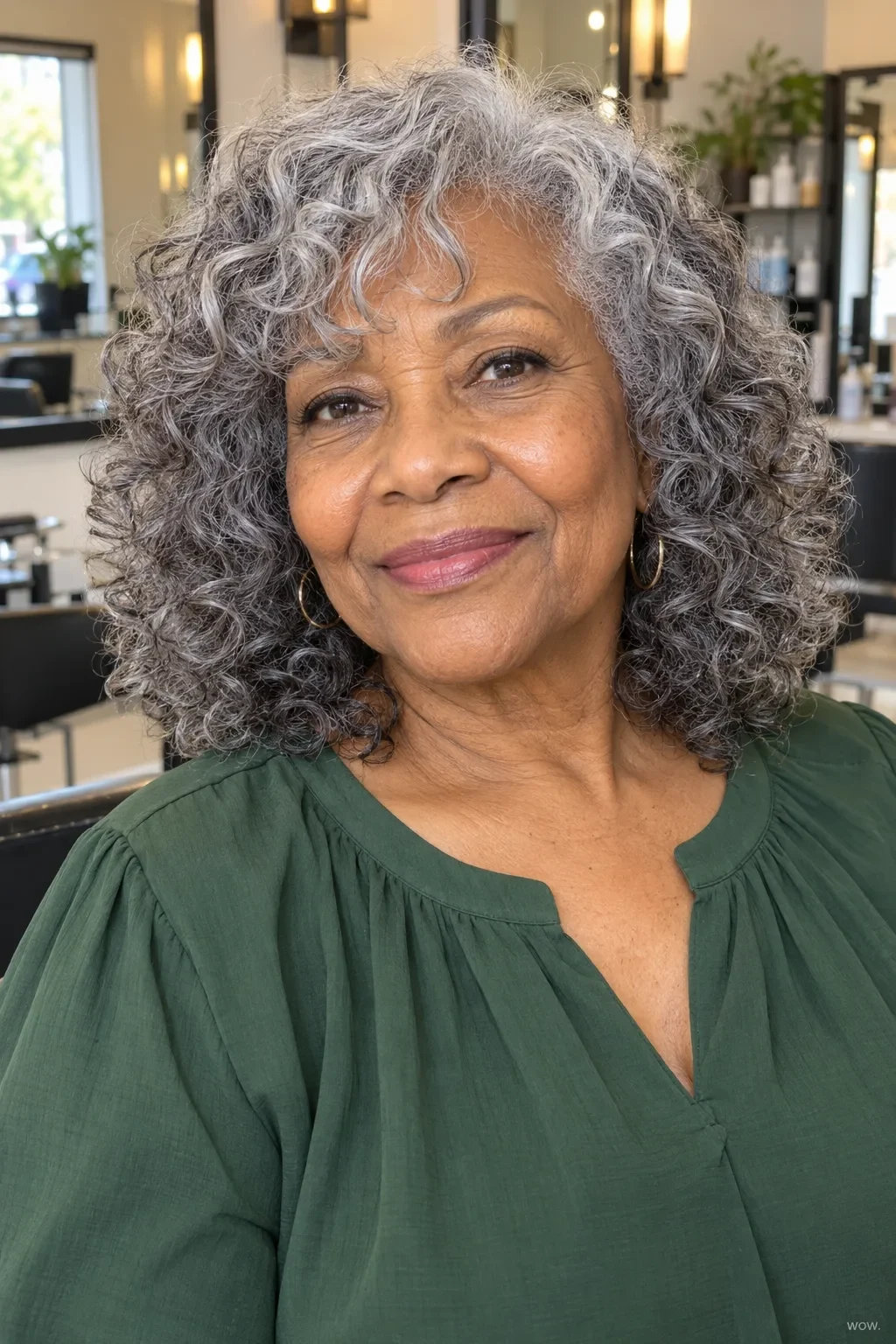
20. Brunette layered lob with a side fringe
A few long layers can add movement to a brunette lob without making the ends sparse. Have the stylist cut the fringe to the length you expect when the hair is dry. If you prefer low upkeep, keep it long enough to sweep away easily.
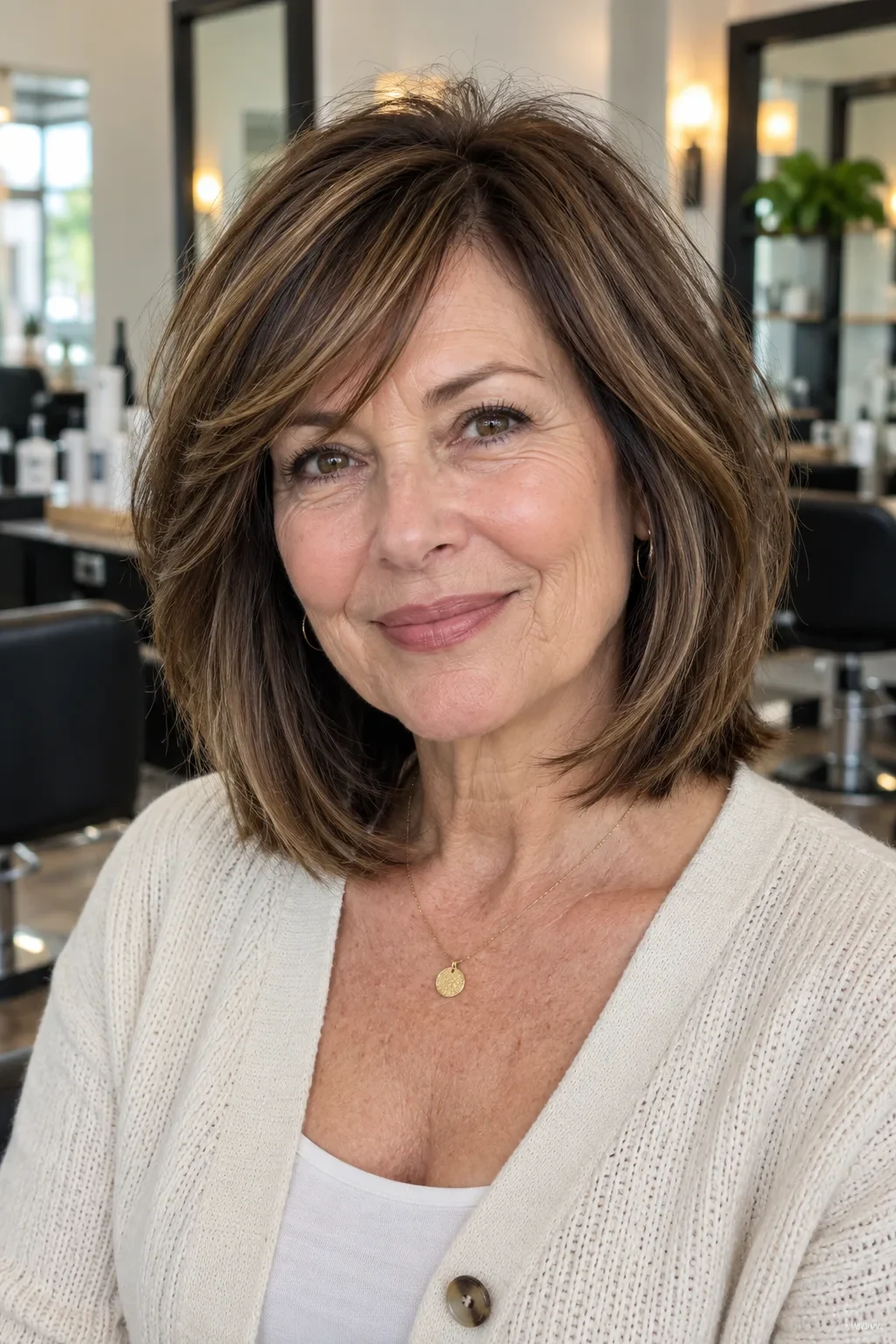
21. Fine gray hair with a full-ended lob
On fine hair, the ends are worth discussing before layering the crown. A clean line at the shoulders can look substantial without needing a complicated cut. Talk about the amount of styling you are willing to do to create lift.

22. Silver waves with a gentle U-shaped hem
Viewed from behind, a subtle U softens the bottom of the haircut while keeping the center longer. Make sure the sides still reach the length you need for your usual ponytail or clip. It is a small detail that can make a medium cut feel different.
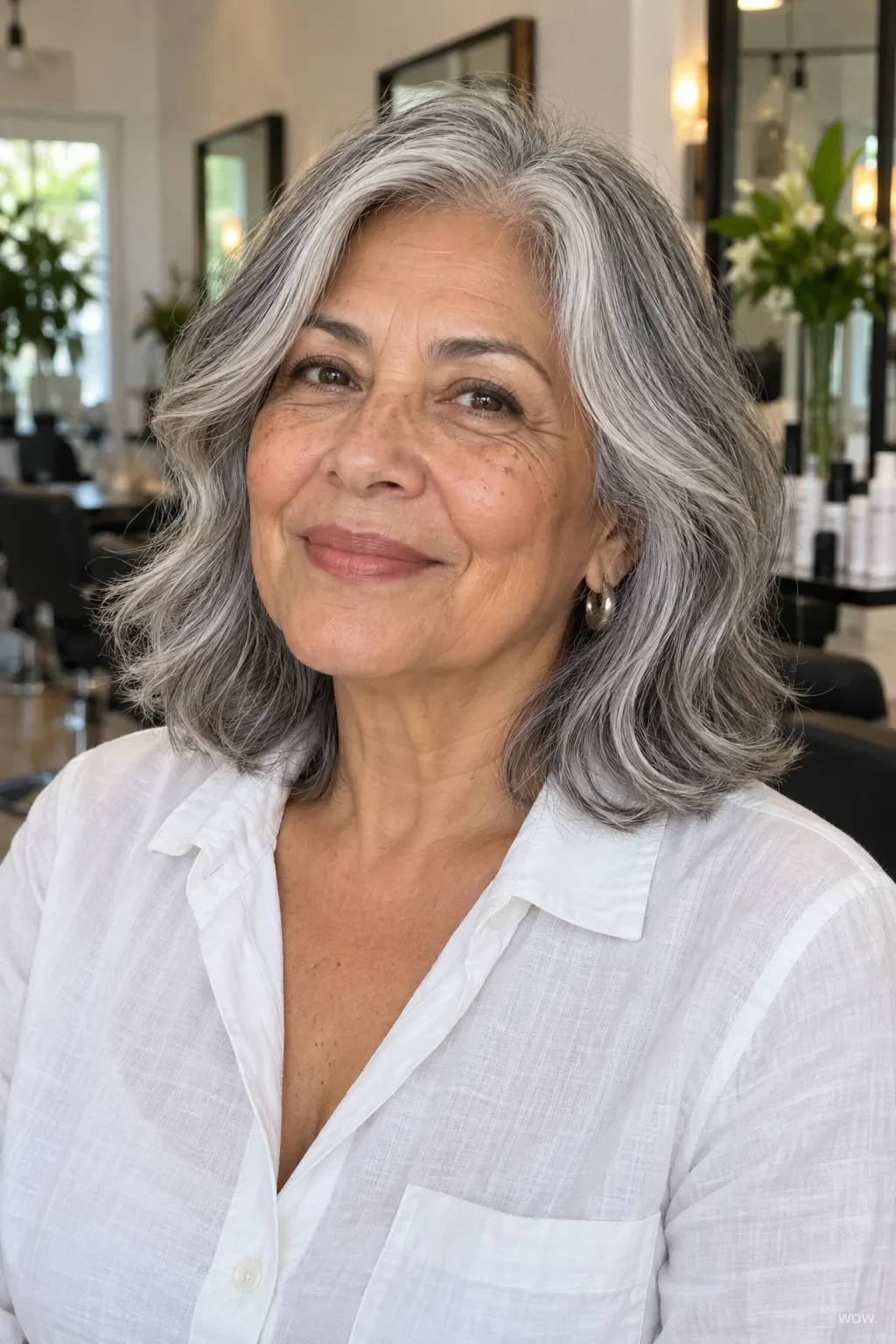
23. Salt-and-pepper medium twists
Natural twists can show off salt-and-pepper color at shoulder length. Decide how much fullness you want around the face and how the style will be maintained. The size and finish of the twists are separate choices from the underlying haircut.
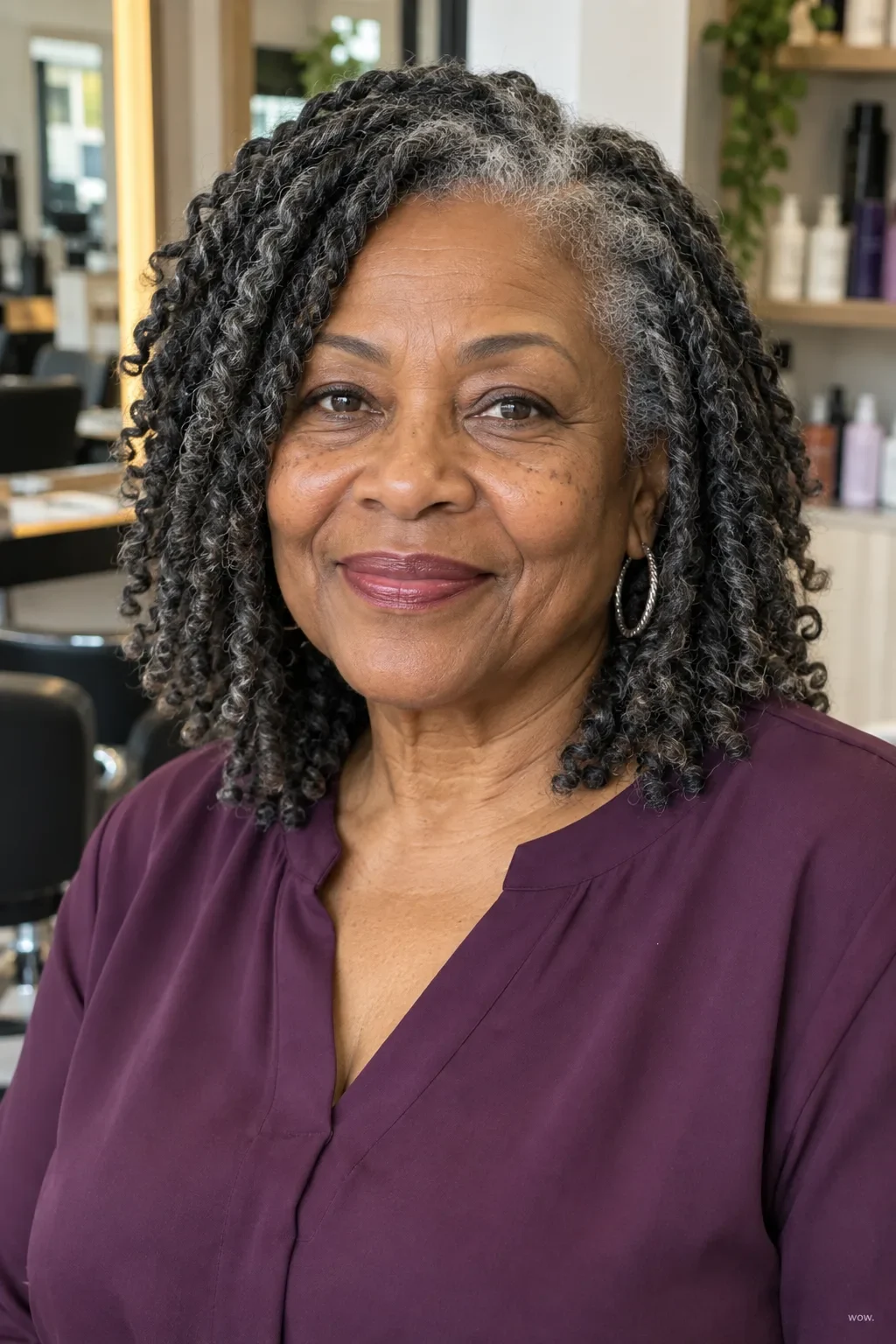
24. Silver hair with soft flipped ends
Ends that turn gently outward can bring a playful finish to a simple medium-length cut. The flip is a styling choice: ask how the haircut will look when you skip a round brush. You may prefer only light layers to preserve flexibility.
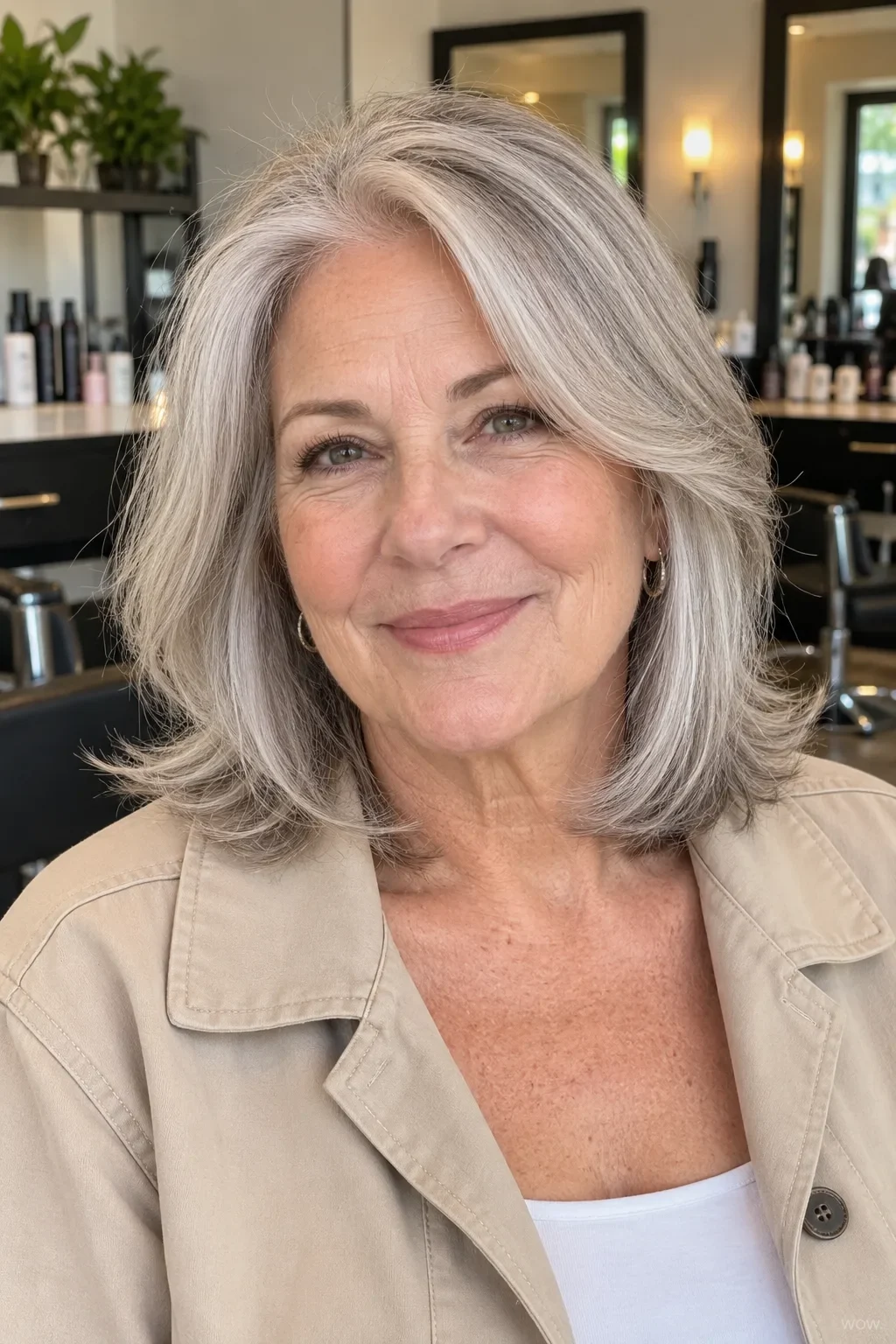
25. Gray wavy lob with long bangs
Cheekbone-grazing front pieces can blend into a wavy collarbone cut. A long fringe often leaves more options for pinning or sweeping it aside. The final placement should follow where your waves naturally separate.

26. Auburn medium curls in balanced layers
Layering can prevent the weight of medium curls from sitting only at the bottom. Keep the pieces around the face longer if you want to avoid an unexpectedly short fringe after drying. Check the finished shape from the front and side.

27. Silver medium bob with long face framing
A medium bob can have front pieces that skim the collarbone without a strongly angled back. This offers a defined shape with more styling room than a chin-length bob. Confirm whether the back should graze the shoulder or sit slightly above it.
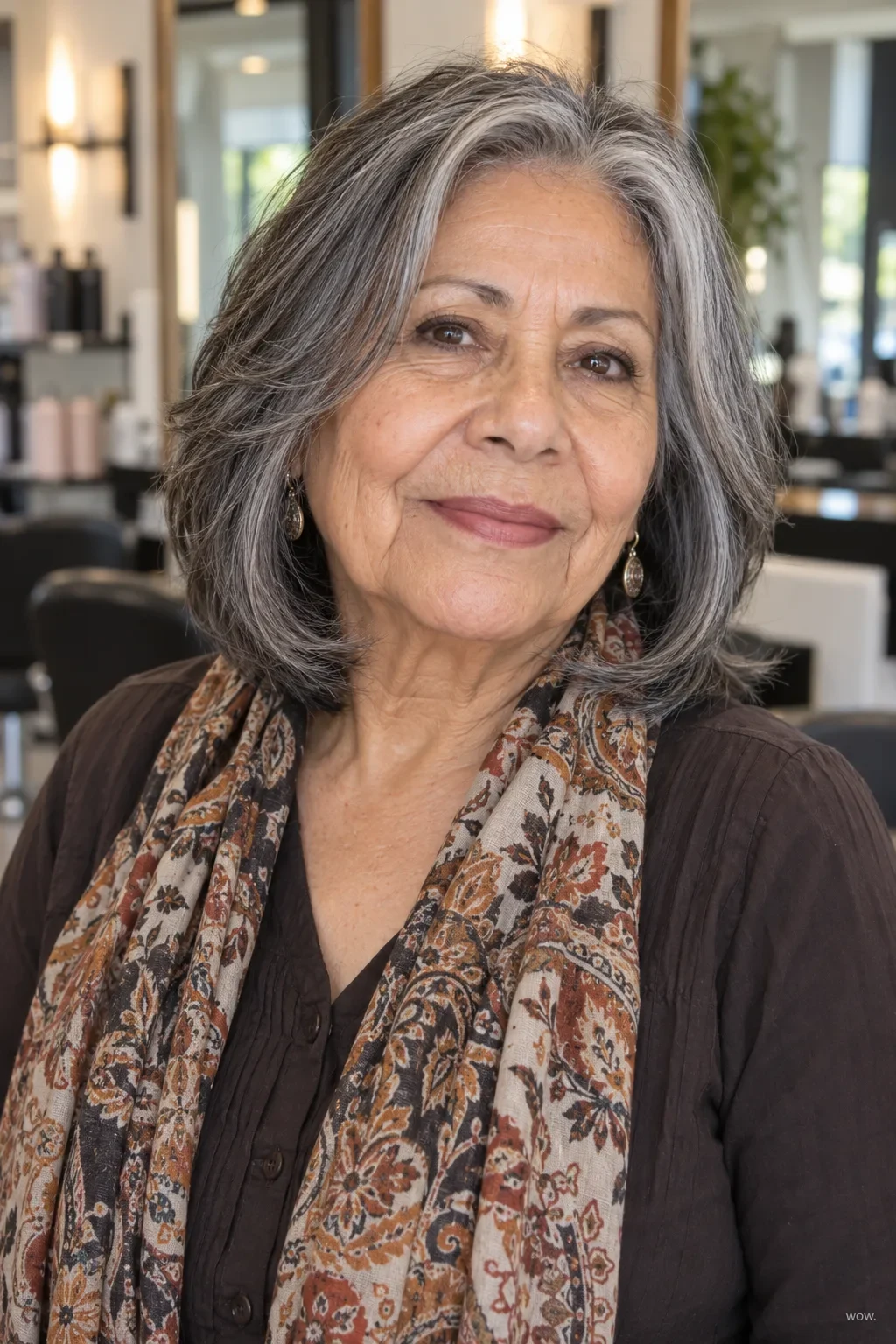
28. Silver-gray coils with a center part
A center part can create a balanced outline in shoulder-length coily hair, but it is not required. The cut should still work with your usual part and the way your coils dry. Ask to review the shape in natural light if possible.

29. Honey-blonde medium layers with a sweeping fringe
Longer layers and a soft side fringe can refresh a fine, colored medium cut. Avoid assuming that more layers automatically mean more volume: ask your stylist to preserve a clear outline at the ends if your hair is sparse there.

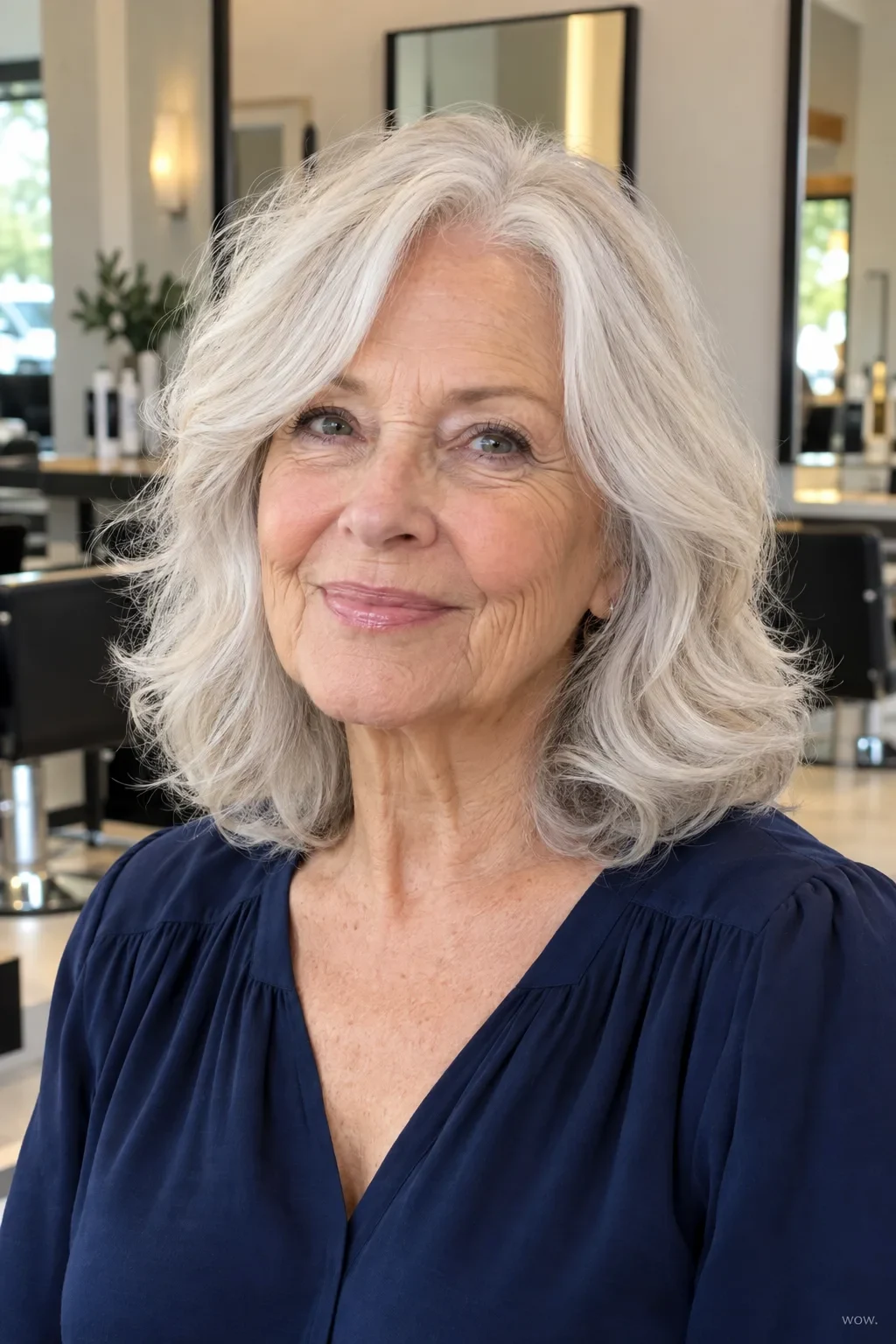
30. White waves with face-framing layers
Soft pieces around the face give white shoulder-length hair movement while leaving enough length for a clip or loose ponytail. Start the layers lower if you want a calm outline. Ask to see the dry result before adding more.
What changes if your hair is fine, gray, curly, or coily?
Hair texture and density can change over time, although no two people have the same experience. On fine hair, removing too much of the perimeter can make the ends look sparse. On thick straight hair, too much weight can make a medium cut feel heavy. On waves and curls, the wet length is a poor guide to the finished shape. On coils, deciding where you want volume is part of the haircut consultation.
Gray hair is not automatically coarse, and colored hair is not automatically fragile. Look at your actual strands and the styling you enjoy. If you have noticed rapid or unusual hair loss, a dermatologist can help evaluate the cause; a haircut changes appearance but cannot identify why hair is shedding.
What to say at the salon
- Bring one front photo and one side or back photo of the same hairstyle.
- Show where you want the ends to land once your hair is dry.
- Say whether you usually air-dry, diffuse, blow-dry, straighten, or set your hair.
- Explain whether you need to tie up your hair or keep it out of your eyes.
- Agree on the shortest face-framing piece or bang before it is cut.
- Check the shape after it dries and ask how to repeat the styling at home.
A useful request sounds like this: “I want a collarbone-length lob with mostly full ends and a few long layers around my face. My hair is fine, I wear it air-dried, and I want the front long enough to tuck behind my ears.” Adjust the details to match your own photo and routine.
Maintaining a medium-length shape
There is no single appointment schedule for all 30 looks. A straight, precise perimeter may show uneven growth sooner; a soft layered cut can change more gradually. Bangs and face-framing pieces often need attention before the rest of the hair. Ask your stylist how the shape should grow out and when it is worth checking in.
Heat-styled photos reflect a particular finish. If you use hot tools, follow the manufacturer’s instructions and the directions on any heat protectant you choose. If you wear your curls or coils naturally, ask the stylist to review the shape in that state so the at-home result is easier to predict.
Frequently asked questions
What is a flattering mid length hairstyle for a woman over 60?
There is no universal answer. A full-ended lob, softly layered shoulder cut, and shaped curly or coily style can all work. The right choice reflects your hair’s texture and density, the time you want to spend styling, and the look you personally enjoy.
Can women over 60 wear long bangs with a medium haircut?
Yes. Curtain, side-swept, and longer face-framing bangs offer different shapes. Discuss your natural part and check where the bangs fall when dry before making them shorter.
Do layers make fine hair look thicker?
Not always. Well-placed long layers can add movement, but taking too much hair from the ends may make fine hair look thinner. Ask how much weight will remain along the bottom edge.
Is shoulder-length hair easier than short hair?
It depends on the cut and texture. Shoulder-length hair offers more ways to clip it back, while a short cut may take less time to wash or style but need more frequent shape maintenance.
Can gray hair be worn at medium length?
Absolutely. Gray, white, salt-and-pepper, and dyed hair can all work at shoulder or collarbone length. Choose the color you want rather than assuming your age determines it.
Should curly hair be cut dry?
Different stylists use different techniques. What matters is that the final length and layers account for curl shrinkage and that the shape is checked in the state in which you usually wear your hair.
Where does mid length hair end?
In salon conversations it often describes hair around the shoulders and collarbone, but there is no universal measurement. Point to the exact place you want the ends to fall after drying.
Choose a photo, then make it your own
Pick two or three of the 30 photos that reflect the length and texture you want. Explain what you like about the front, back, and amount of fullness. A stylist can then help adapt the idea to your real hair and to the way you plan to wear it every day.
Conversa sobre este corte